

Can You Use Yellow Food Coloring To Tint Makeup
How Safe are Color Additives?
Image
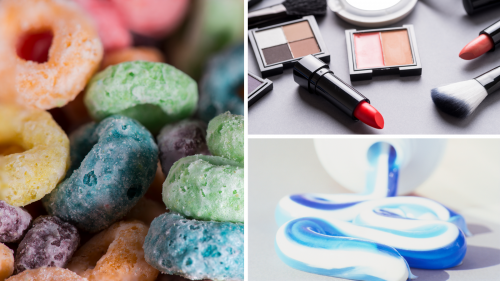
Colour additives give the red tint to your fruit dial and the green hue to your mint-flavored toothpaste. They are dyes, pigments, or other substances that can impart color when added or applied to a nutrient, drug, cosmetic, or the human torso. They can be constitute in a range of consumer products—from cough syrup and eyeliner to contact lenses and cereal.
So how safe are they? "Color additives are very safe when used properly," says Linda Katz, Yard.D., G.P.H., Director of the Function of Cosmetics and Colors in FDA's Heart for Food Condom and Applied Diet (CFSAN). "At that place is no such thing as absolute prophylactic of any substance. In the example of a new color condiment, FDA determines if there is 'a reasonable certainty of no impairment' nether the color additive's proposed conditions of use." Here are more facts yous should know about color additive prophylactic.
FDA regulates color additives used in the Us. This includes those used in food (and dietary supplements), drugs, cosmetics, and medical devices. These colour additives (except coal-tar hair dyes) are field of study by constabulary to approval past the bureau and must exist used only in compliance with the canonical uses, specifications, and restrictions. In the approval procedure, FDA evaluates rubber information to ensure that a color additive is condom for its intended purposes. Color additives that FDA has found to cause cancer in animals or humans may non exist used in FDA-regulated products marketed in the U.s..
2 master categories brand up FDA's list of permitted colour additives. In addition to undergoing approval, some colour additives are known as "certifiable." Certifiable colour additives are man-made, derived primarily from petroleum and coal sources. The manufacturer submits a sample from the batch for which information technology is requesting certification, and FDA tests the sample to decide whether it meets the color condiment's requirements for composition and purity. If it does, FDA "certifies" the batch and problems a certification lot number. Only and then tin that batch be used legally in FDA-regulated products.
Certified color additives have special names consisting of a prefix, such as FD&C, D&C, or Ext. D&C; a colour; and a number. An instance is FD&C Yellow No. 6, often found in cereals, ice cream, and broiled goods. Sometimes a color additive is identified by a shortened form of its name, consisting of only the color and number, such every bit Yellow 6.
Other color additives, in the second principal category, are "exempt" from batch certification. These are obtained largely from plant, animal, or mineral sources. Examples include caramel color and grape color extract. They are not discipline to batch certification requirements, only they are still artificial colour additives and must comply with regulatory requirements. Both types of color additives are bailiwick to rigorous condom standards.
Approval of a color additive for ane intended use does not mean approval for other uses. For case, no colour additives have been approved for injection into the skin—even though tattoo parlors often merits that the pigments in their inks are "FDA-canonical." Likewise, no colour additives are approved for permanent makeup (a form of tattooing). And henna is approved for use on the hair, but not the pare.
Reactions to color additives are rare. It is possible, just rare, to have an allergic-type reaction to a color additive. For example, FD&C Xanthous No. 5 may cause itching and hives in some people. This color additive is widely constitute in beverages, desserts, processed vegetables, drugs, makeup, and other products. FDA requires all products containing FD&C Yellowish No. 5 to identify it on their labels so that consumers who are sensitive to the dye can avoid information technology. On medicine labels, this certified color additive is as well identified by its uncertified proper noun, "tartrazine."
FDA can accept activity confronting companies if there are violations. In the absenteeism of a voluntary action such every bit a product recall, FDA can consequence warning letters, detentions, and import alerts for products that are found to exist dangerous or to contain colour additives that are prohibited, misused, or non properly identified as ingredients. FDA can as well seize such products. Color additive violations are a common reason for detaining imported cosmetic products that are offered for entry into the United States. Color additives in foods and cosmetics marketed abroad are not subject to the same safeguards as those marketed in the U.s..
FDA monitors reports of problems related to color additives. Written report agin reactions to color additives to your local FDA Consumer Complaint Coordinator.
Or, written report bug to CFSAN's Adverse Result Reporting System (CAERS) by phone at 301-436-2405 or email at CAERS@cfsan.fda.gov.

Can You Use Yellow Food Coloring To Tint Makeup,
Source: https://www.fda.gov/consumers/consumer-updates/how-safe-are-color-additives
Posted by: felixforridgen.blogspot.com
0 Response to "Can You Use Yellow Food Coloring To Tint Makeup"
Post a Comment