

How To Draw An Oak Tree Oak Tree Drawings
About Vincent Whitehead
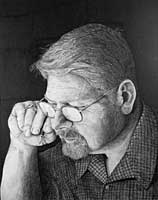 My life has been influenced over the years past many things. First is my cardinal conventionalities in God and 2d my family and the rural up-bringing that I take had. These two basic values take guided me and given me a honey for nature, history, and the country life way.
I accept ever loved to draw and pigment but, in 1996, I decided that information technology was more than than only a hobby for me. I was not happy with the occasional sketch or quick scribble. I began seriously because the world around me and and then working out the God given talent toward a perfecting of a personal style and then that I could render the scenes that I and then dearly love. It is that perfecting process that has guided me to where I am now. No, I have non arrived. Nor have I attained perfection. On the contrary, I believe my journeying has merely served to push me on toward the marker. It has given me feelings of accomplishment and greatened my respect for God'southward cosmos.
Follow this link to visit Vincent's Website
How to Describe an Oak Tree (Deciduous) with Pen & Ink
(Click Images for Larger View)
As we accept now finished the tutorials based on the Gilbert Home Portrait, it is fourth dimension to beginning the one based on a large old Oak, featured in the "Between Ii Trees" drawing of the Elwer Family Barn and holding.
If you take worked through the tutorials from the "Gilbert Habitation Portrait" you will have found that the tree bark work is accomplished past using a serial of lines, squiggles, dots (called stipple work) and tone work done by a "drag method" I have developed, in a layering process that produces a believable rendering. The layers build depth and tone and can yield values in equally many as 7 strengths. The procedure requires patience and a very light touch simply can produce very conceivable trees.
The main tree in the "Gilbert Home Portrait" was a Maple. This tree, an Oak, has a coarse bark and has wonderful characteristics. The Oak that we volition now comprehend has fifty-fifty more character and depth than the maple. This old Oak has been on the belongings for ever information technology seems. I choice to do this drawing originally because of this tree and and so heard that the befouled was to be taken down. Once I heard that, I decided to accept a look at it once more and somewhen decided I could draw the trees I liked and place the barn in the background equally information technology fix in existent life. That'south what I did.
Part ane – Let's get started…
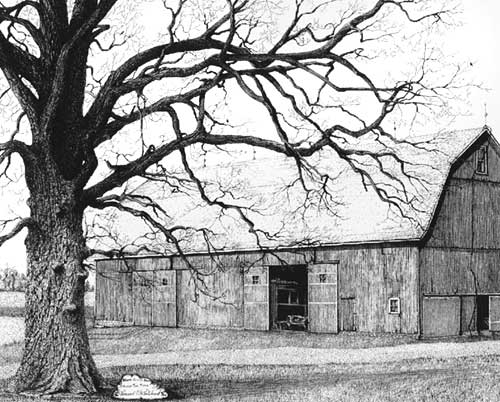
As with the start work on the tree from the Gilbert Home holding, I start with a light pencil sketch or outline of the old oak, you tin can see this from the Layout image compared to the Oak Tree reference:
| With the fine indicate pen, I ensure that I have expert ink flow on a flake piece of paper and then wipe the ball tip make clean. Starting as before in the Maple tree tutorial, at the base of operations of the trunk where the roots go into the ground at the viewer'due south bottom correct of the tree base I define, with light pressure, the management of the bark growth. This helps to requite dimension and shape to the bark and the root base of operations itself. You can run across this in the close-up view of WIP image no.1 ? | 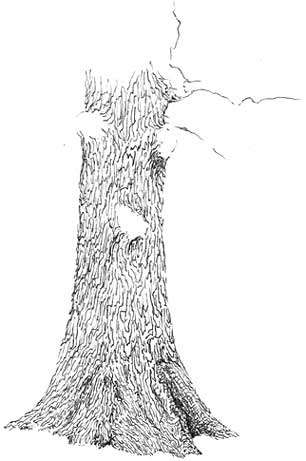 |
| Accept into consideration the three dimensional view of the tree body. Past thinking of this tree that way and non equally a line on a apartment slice of paper you volition exist able to place the line work to aid build a more than conceivable three dimensional object. After working this first department of the tree stump or body you lot will end up with an image that should reflect the outset layer of tone in the torso. You should be able to run into the bark management and the basic growth pattern in the tree. Await at WIP Epitome no.2 to encounter what I am talking about | 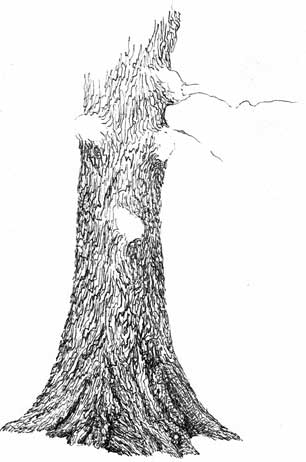 |
I go on my light tone work all the mode up the chief trunk then motion dorsum downward to the bottom of the body to beginning once more. I continue working my way around the tree stump until I have the base worked in so starting time working up the trunk once again. Once the basic layout shapes and lines are in you will end up with a single tone and layer image that is a composite of the master design of the tree trunk. I then accept my medium signal pen and begin to work in the darker tones along the layout lines that will make upwardly the shadowed areas in the bark piece of work itself. The medium point pen is the best tool for this job as it is a bit broader in line. I still just utilize light pressure with this pen. If you go also nighttime at first you volition be fighting to endeavour and go the layers of value that are necessary to yield a believable three dimensional tree.
! Remember, with ball point pen it is always easier to add layers of tone than to attempt to remove them.
After the medium bespeak tone layers are in you tin begin to put in the small-scale angled lines to build out the adumbral areas along the bark edges in the body.
! Call back, continue a consistent light source in your work.
The next layer of tone that will exist used is with the medium betoken pen over again but, is done by stipple work. This helps to build up texture and increase areas of shadow in the bark work.
Outset at the lesser of the trunk at where the roots come out of the basis. Keeping in mind the shadow areas that volition be cast in reference to the lite source, add together the quick stipple work to the tree trunk work. You lot won't add together stipple work to the whole trunk in every area. Once the stipple piece of work is in you will accept a pretty good looking work in progress tree trunk. See images no. 3 and 4:
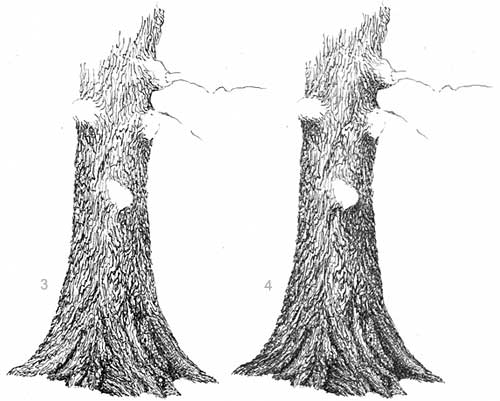
| The terminal layer is done with the medium point pen again. This is where you use the "Drag" method that nosotros discussed earlier in the tutorial on the maple tree from the Gilbert home portrait.Laying the pen tip more on its side brainstorm with a light touch and elevate the tip over the area that you desire to add together tone to. It's a pretty quick motion and non meant to get out a singled-out line rather more to go out a streak or smeared like layer of tone. You can also blend some of the ink with a blending stump or paper towel rolled tightly together and use just the very pointed tip. You don't want to overly blend any one spot though every bit you lot will begin to see a smooth on the surface.The last layer of line work is washed with the Fine betoken pen. This is where you go in and define some fine details in the bawl. I find points that I want to bring out a bit more than and reinforce the line that is already there. I too take this time to add any fine line light strokes that demand to be added to help build the density of the object. Encounter image no. 5: |  |
At present that we have a good beginning on the tree trunk, information technology'southward time to have into considerations the details that accept fabricated this Old Oak so interesting to me. The trunk has iii large bumps of growth on information technology just beneath the first small branches. These are large raised, bark covered objects of growth. They are not that hard to put in and go along the tree interesting.
Role 2 – moving on…
| Let's start past looking at how they appear in the reference photoNotice that they accept a highlighted side and a shadowed side. As well, that the bawl is much tighter as it works around the growth. The goal is to work your bark growth lines up to the point just beneath the lesser of the first growth bump. So begin to work the lines in a very lite tone from the trees left side into the center of the bump. | 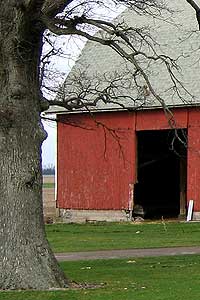 |
 | Side by side work the right side of the growth bump. Here is where you lot want to build the darker shadows that will force the highlighted portion of the bump to appear to come forward away from the rest of the torso and bark work. I switch to the medium bespeak pen now and go back and add the next layer of tone to the shadowed area of the bumps.You should have an epitome that resembles image # 6 |
From this point I work toward the first limb and branches with growth lines in the bark that lead yous to them. I cull the limbs I desire to render and decide which would be drawn outset and if there will be any over-lapping limbs or branches. Work out to where the over-lap volition be and so finish. Piece of work the next limb or co-operative to and through the place of the overlap. I keep in heed my low-cal source equally I put in my shading and depth lines in each branch and limb.
| The farther up the tree you get the farther away from the viewer it will become and you will need to subtract the amount of item in the bark lines that are seen. Make them closer together and the overall tone of the tree darker equally it goes up and the branches and limb become abroad. Again, calorie-free layers at first make up the limbs and branches. Every bit you put the following layers on retrieve your light source and keep the highlighted side lighter. You lot can use the drag method in the limbs and branch work to create the shadowed sides. Yous can see a small-scale example of the branch and limb piece of work in WIP paradigm # 7 ? | 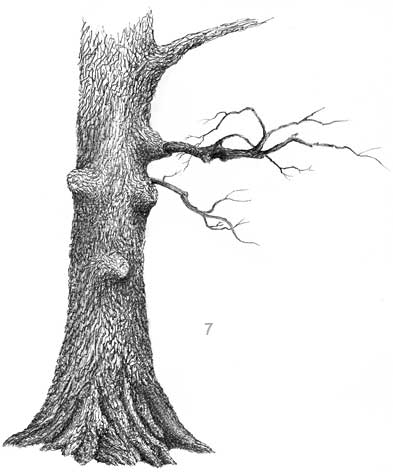 |
The next portion of the drawing work in the oak tree is to stop the limb and branch work. Using the methods that nosotros used in the bawl work, go along the line layers in the growth management. I utilize light pencil lines to put in the basic direction that I want the limbs and branches to get in keeping with the reference photo. There will be less detail line work in the smaller limbs and even less to none in the smaller branches and twigs that get further away from the viewer in the scene. This is also true just due to the size of the branches and twigs.
| Keep in mind where limbs and larger branches will over-lap and run in front or behind each other. This is also a point that you lot tin add together in cast shadows to lower branches from those above or beside. These little details help build the depth and dimension in the tree drawing itself. This is where the darker tones in the branches come up in equally you work upwardly the tree. | 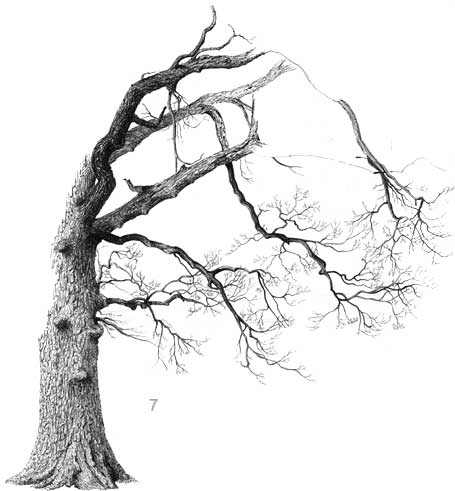 |
Think that there are very few to no perfectly straight lines that occur in the growth of a tree in nature peculiarly in this type of Oak tree and then, every bit yous piece of work through the limbs and branches proceed your lines flowing off the straight and flat path. Gravity and the wind have a lot to do with how a tree grows and looks in nature. Think nearly the weight that would be in the limbs. Show the stress of that weight in each branch every bit gravity tugs and pulls each one toward the ground as information technology struggles to grow Upward and Out reaching for the sun lite information technology needs. It's a living thing that struggles against the elements to survive. Let that struggle show in your rendering of the tree in each co-operative and limb.
| Then as you go to the ends of the limbs and branches notice that the twigs arch slightly upwards. This is that struggle of the tree to constantly continue itself pushing upwards to the suns rays. I love to draw these yard onetime trees when the foliage is gone. Information technology allows me to evidence each of the turns and bends that fourth dimension and the elements have brought the tree through.Each tree has a character all its ain. I strive to bear witness that graphic symbol in each drawing I do.Give them life. | 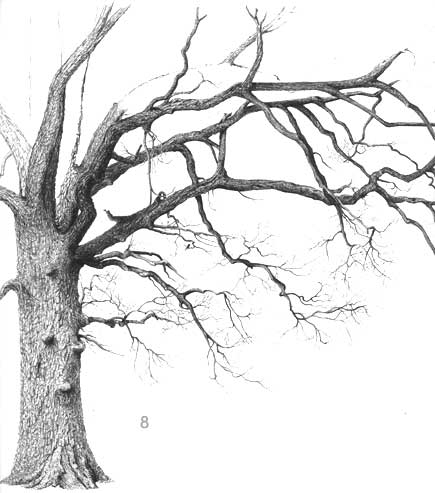 |
If you lot notice this last Work In Progress image, y'all will run into that I accept already added the oak's first resident… a bird resting on a co-operative. There will be many more of these to come before I call the drawing finished.
To finish the tree I piece of work the rest of the limbs and branches to the border of the page and out into the scene. The diameter of the limbs and branches get smaller as I said before, the farther away from the viewer they get and the more than toward the cease of the branch that they grow.
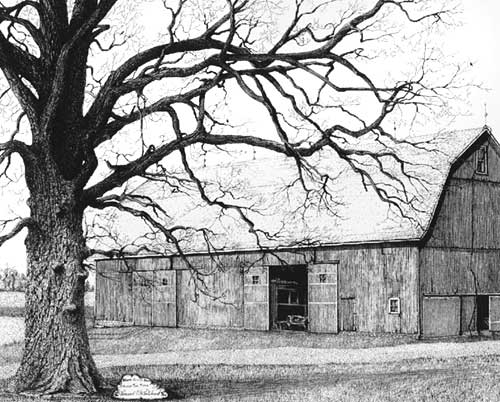
I hope that this tutorial has been and will be helpful to y'all to see how to render the different types of trees out there. This is in no way meant to be an exhaustive study on all copse. It is meant to help guide you every bit you study to develop your own skills as an creative person. If you take whatever specific questions for me please email me and I will be happy to answer them.
Vincent D. Whitehead
"Go on On Creating!"
May 2022

Source: https://www.artinstructionblog.com/how-to-draw-an-oak-tree-step-by-step
Posted by: felixforridgen.blogspot.com
0 Response to "How To Draw An Oak Tree Oak Tree Drawings"
Post a Comment